David Genova est un doctorant au sein de l'équipe Analyse et Synthèse des Sons, inscrit à l'école doctorale EDITE (ED130) de Sorbonne Université . Féru de musique, sa recherche porte sur l'intégration de réseaux de neurones dans des synthétiseurs audio, ainsi que sur l'interprétabilité en intelligence artificielle.
Sa thèse intitulée "Extractions de réseaux de neurones frugaux à partir de modèles immenses pour applications audio embarquées" se déroulera en anglais lundi 20 octobre 2025 à 10h30 salle Stravinsky.
Elle sera enregistrée sur Youtube : https://youtube.com/live/ULb9xDH1F3s
Le jury sera composé de :
Thor Magnusson, rapporteur, University of Sussex and University of Iceland
Nick Bryan-Kinns, rapporteur University of the Arts London
Mark Sandler, relecteur, Queen Mary University of London
Irina Illina, relecteur, LORIA INRIA Nancy
Philippe Esling, directeur, Sorbonne Université
Philippe Codognet, co-directeur, JFLI, Sorbonne Université
Tom Hurlin, co-directeur Squarp Instruments
Résumé :
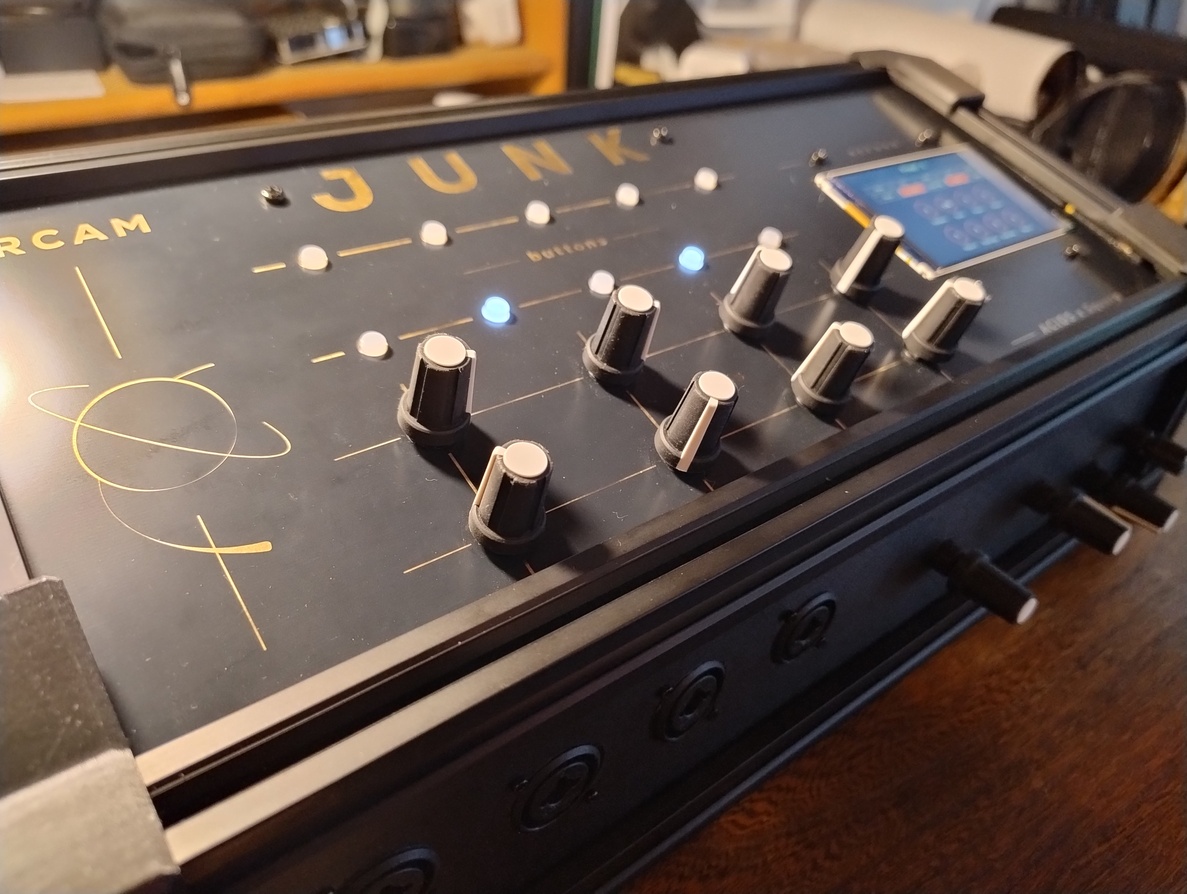
Les progrès en intelligence artificielle ont donné lieu à de multiples utilisations dans des contextes créatifs, et notamment dans le domaine de la musique. Toutefois, la complexité de calcul des réseaux de neurones empêche leur utilisation dans des architectures embarquées, typiquement utilisées dans des synthétiseurs. Cet aspect constitue un obstacle majeur au développement d'instruments de musiques exploitant pleinement le potentiel créatif offert par de tels modèles. Cette thèse a pour objet la conception de réseaux de neurones légers et efficaces par élagage de modèles surparamétrés. Notre travail repose sur l'hypothèse que les deux principaux effets du surparamétrage résident, d’une part, dans le haut niveau de redondance au sein des représentations intermédiaires, et d’autre part, dans la sur-spécialisation de certaines unités. Ce constat a mené au développement d'une stratégie d’élagage fondée sur l’apprentissage, permettant d’extraire des sous-réseaux adaptés à des tâches et à des données spécifiques. Appliquée aux modèles génératifs audio, cette stratégie permet de produire des sous-réseaux conservant une haute qualité de génération, tout en étant compatibles avec les ressources de calcul de plusieurs architectures embarquées. Ce travail a conduit à la réalisation de JUNK, un synthétiseur tirant parti des avantages de la synthèse audio neurale, et adapté à une utilisation musicale, tant dans un cadre de composition que d'interprétation.